

Loving the Lost
9 As Jesus passed on from there, he saw a man called Matthew sitting at the tax booth, and he said to him, “Follow me.” And he rose and followed him.
10 And as Jesus reclined at table in the house, behold, many tax collectors and sinners came and were reclining with Jesus and his disciples.
11 And when the Pharisees saw this, they said to his disciples, “Why does your teacher eat with tax collectors and sinners?”
12 But when he heard it, he said, “Those who are well have no need of a physician, but those who are sick.
13 Go and learn what this means: ‘I desire mercy, and not sacrifice.’ For I came not to call the righteous, but sinners.”
I. Meet the Missional Master
9 As Jesus passed on from there, he saw a man called Matthew sitting at the tax booth, and he said to him, “Follow me.” And he rose and followed him.
A. No one is beyond the reach of God’s forgiveness.
Matthew was a tax collector.
Matthew went from tax collector to testimony
Tax collectors were despised by the Jewish people because they worked for the Roman government and often exploited their own people.
Jesus did not choose perfect people to follow Him, but flawed men who were living in sin.
B. Growth in discipleship means leaving the past behind
Matthew immediately left the tax booth.
Discipleship requires a turning point where we leave our old life and devote ourselves fully to Christ.
C. The missional foundation
Matthew followed Jesus, but he also invited others to meet Him (v.10).
And as Jesus reclined at table in the house, behold, many tax collectors and sinners came and were reclining with Jesus and his disciples.
The missional foundation is this: When you truly follow Jesus, you want others to know Him also.
Found people Find People
Who is your Matthew?
II. Mold a Missional Mindset
11 And when the Pharisees saw this, they said to his disciples, “Why does your teacher eat with tax collectors and sinners?”
12 But when he heard it, he said, “Those who are well have no need of a physician, but those who are sick.
13 Go and learn what this means: ‘I desire mercy and not sacrifice.’ For I came not to call the righteous, but sinners.”
A. Model Jesus
“Those who are well have no need of a physician, but those who are sick.”
15 The saying is trustworthy and deserving of full acceptance, that Christ Jesus came into the world to save sinners, of whom I am the foremost.
Jesus did not shout at sinners from a distance.
He entered their spaces.
He sat at their tables.
He built relationships.
B. Active engagement
Rather than withdrawing from the world, Jesus calls believers to be present in it in order to influence it.
We are not called to isolation.
We are called to bring the presence of Christ into everyday spaces.
C. Love versus approval
There is a difference between loving someone and approving of their actions.
Jesus loved sinners deeply, yet He never affirmed their sin.
We are called to love people for who they are while pointing them toward the transforming grace of God.
III. Maintain Missional Integrity
A. Pursue holiness
Jesus spent time with sinners, but He was never shaped by their sin.
Believers must remain focused on God’s Kingdom and not be led astray by worldly desires.
We must influence the culture rather than allowing the culture to influence us.
14 I have given them your word, and the world has hated them because they are not of the world, just as I am not of the world. 15 I do not ask that you take them out of the world, but that you keep them from the evil one. 16 They are not of the world, just as I am not of the world.
B. Embrace the work
Loving the lost requires intentional effort.
It takes time.
It takes prayer.
It takes compassion.
Reaching people is rarely convenient, but it is always worth it.
IV. Move with a Missional Strategy
A. Invest relationally
People rarely care about what you believe until they know you care about them.
Evangelism often begins with relationship.
B. The Good Samaritan principle
Loving the lost means stepping into someone’s need.
Sometimes it requires sweat equity.
Sometimes serving someone opens the door for spiritual conversations.
Pray for a “God idea” that will touch their heart and open a door.
C. Acts of kindness
Make relational investments.
Jesus ate with sinners.
Small acts of kindness can create opportunities for the gospel.
Serving in humility breaks down the barriers.
• Send them a text
“How are you doing?”
“I’ve been praying for you.”
• Send them a card
• Drop off a dessert
• Send them a DoorDash
• Take them to coffee
• Help them with a project
Small acts of love can lead to life-changing encounters with Jesus.
Jesus said: “Those who are well have no need of a physician, but those who are sick.”
13 Go and learn what this means: ‘I desire mercy and not sacrifice.’ For I came not to call the righteous, but sinners.”
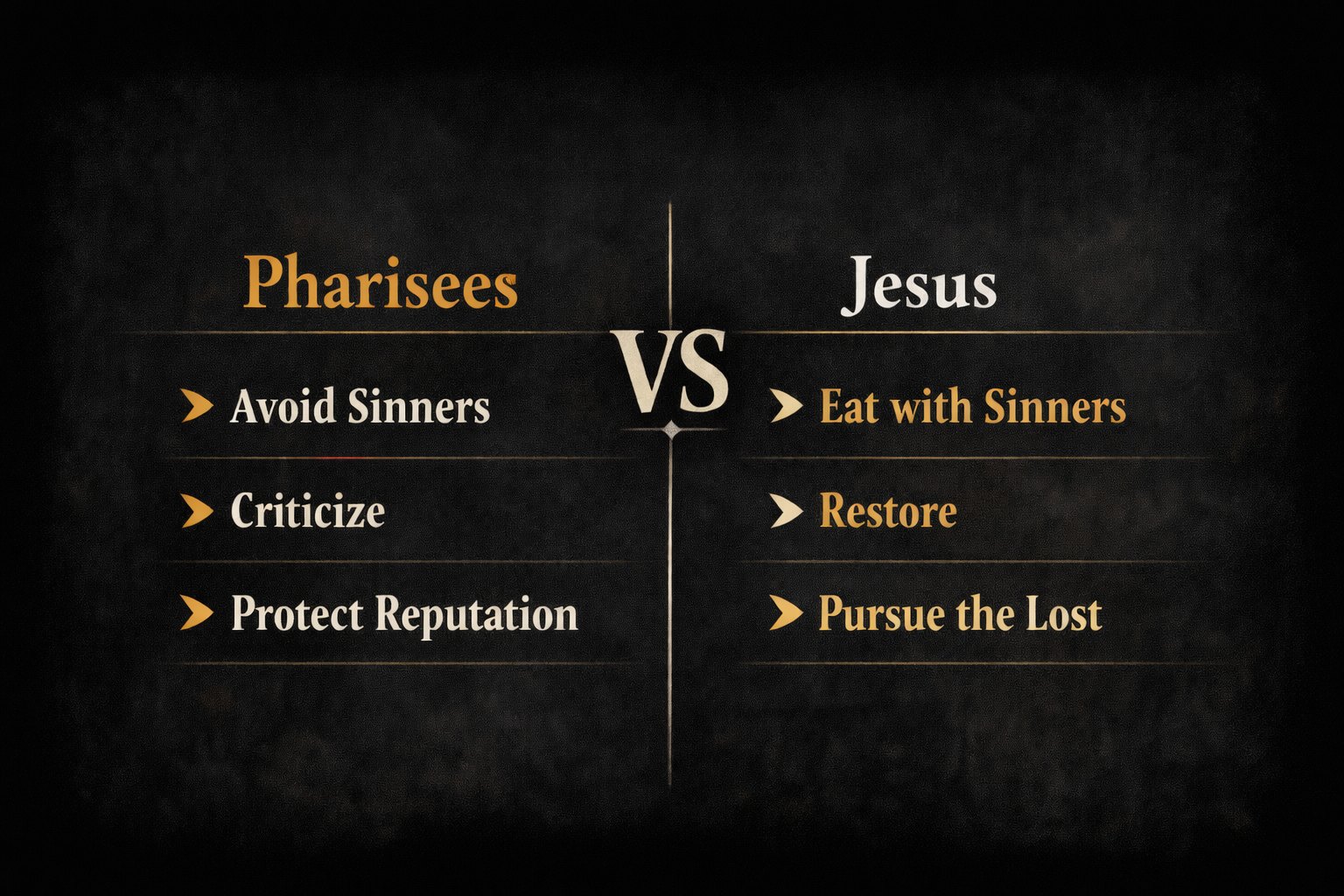
The Pharisees were about rule, rituals, sacrifices and outward obedience, but they lacked compassion for the people who were far from God.
() God has always valued a heart of mercy more than religious performance.
8 He has told you, O man, what is good; and what does the Lord require of you but to do justice, and to love kindness, and to walk humbly with your God?
The church is not a museum for saints.
It is a hospital for sinners.
We are called to love the lost the way Jesus did.
109 views